


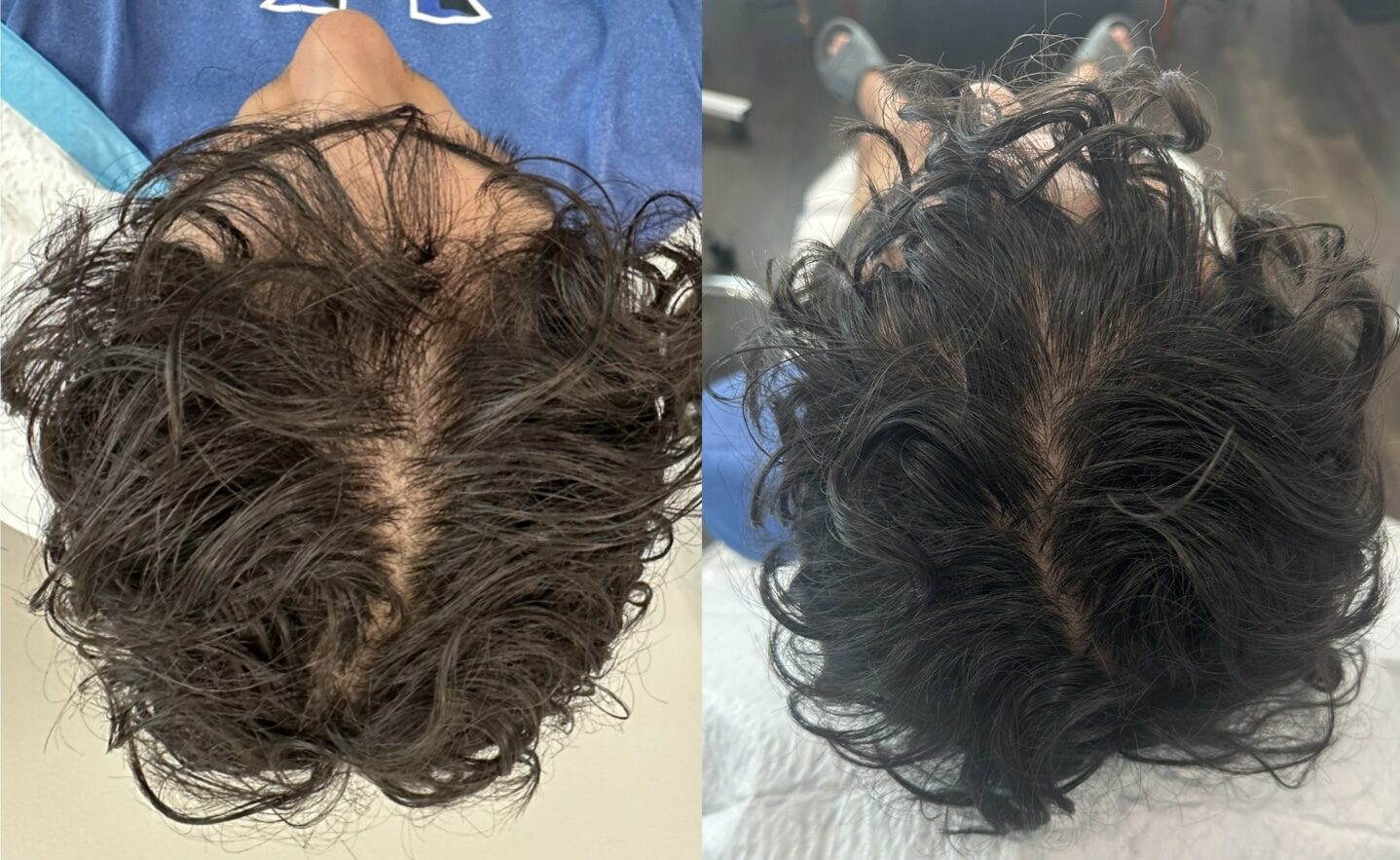
Finding more hair in your brush. Seeing more scalp when you look in the mirror. Noticing that your ponytail feels thinner than it used to.
Hair loss can start subtly.
You may tell yourself it is stress, a change in your routine, or simply something that happens with age. But when the shedding continues, or your hair begins to look noticeably thinner, it is natural to start wondering what you can actually do about it.
The good news is that you do not necessarily have to wait until hair loss becomes significant before addressing it.
Today, there are several nonsurgical approaches designed to support the scalp, stimulate hair follicles, and encourage healthier-looking hair growth. At AVIA Medical Spa in Carrollton, our approach focuses on personalized hair restoration plans designed around your degree of thinning, scalp health, and goals.
So, if you are searching for hair restoration treatment in Carrollton, which options are actually worth considering?
Let’s take a closer look.
Why Does Hair Loss Happen?
Hair loss is not always caused by one thing.
- Genetics and aging are common contributors, but changes in hormones, stress, nutritional factors, illness, medications, and other health-related factors can also influence the hair growth cycle.
- Some people notice gradual thinning across the scalp. Others see more noticeable changes around the hairline or crown.
- Hair may also become finer over time, making the scalp more visible even if you are not experiencing dramatic shedding.
- This is why identifying the pattern of hair loss matters.
A treatment that works well for one person may not be the right approach for another.
Before beginning a hair restoration plan, it is important to understand what may be contributing to your hair loss and whether your follicles are still capable of producing new growth.
When Should You Consider Hair Restoration?
You do not have to wait until you have significant hair loss to seek help.
In fact, addressing thinning earlier may give you more options.
You may want to consider a consultation if you are noticing:
- Increased hair shedding
- A widening part
- A thinner-looking ponytail
- More visible scalp
- Gradual thinning around the crown
- A receding hairline
- Hair that feels less dense than it used to
- Changes in hair thickness or overall volume
Hair restoration can be appropriate for both men and women experiencing thinning and hair loss.
The earlier you understand what is happening, the easier it can be to create a thoughtful plan.
Hair Restoration Treatment: Supporting Growth at the Source
One of the primary hair restoration treatments offered at AVIA is a nonsurgical regenerative approach designed to stimulate the hair follicles.
- The goal is not simply to make hair look fuller temporarily.
- It is to support the biological environment around the follicles and encourage healthier hair growth over time.
- AVIA’s hair restoration approach involves targeted treatments designed to support areas experiencing thinning and encourage natural-looking hair growth.
- This approach can be particularly appealing if you want to address thinning without surgery.
Rather than undergoing a surgical hair transplant, regenerative hair restoration uses targeted treatments to support the follicles you already have.
PRP for Hair Loss: How Does It Work?
You may have heard of PRP, or platelet-rich plasma, in the context of hair restoration.
PRP uses components from your own blood.
- During a PRP treatment, a small blood sample is collected and processed to concentrate the platelets. The prepared solution is then injected into targeted areas of the scalp.
- Platelets contain growth factors that are involved in the body’s natural repair processes. The goal of PRP hair restoration is to create a supportive environment for hair follicles and encourage healthier growth.
- The treatment itself typically takes about an hour, although your exact experience can vary depending on your treatment plan.
And because the treatment uses components from your own blood, PRP is considered a regenerative approach rather than a traditional cosmetic filler or surgical procedure.
What About PRF, Exosomes, and Other Regenerative Treatments?
Hair restoration has evolved beyond traditional PRP.
- At AVIA, advanced regenerative hair restoration options can include PRP, PRF, Wharton’s Jelly, and NanoExosomes, depending on the treatment plan.
- These treatments are designed around the idea of supporting the hair follicle environment rather than simply masking visible thinning.
- However, more treatments do not automatically mean better results. The right combination depends on your individual situation.
A consultation allows your provider to determine which approach makes sense for your hair goals rather than putting everyone on the same protocol.
HydraFacial Keravive: Don’t Forget the Scalp
Healthy hair starts with the scalp.
- If your scalp has buildup, excess oil, or other factors affecting its overall condition, simply focusing on the hair itself may not address the complete picture.
- This is where HydraFacial Keravive can play a role. Keravive is a specialized scalp treatment designed to cleanse, exfoliate, and hydrate the scalp.
- It can help refresh the scalp while complementing a broader hair restoration plan. Think of it as a facial—but for your scalp.
- It can help refresh the scalp while complementing a broader hair restoration plan.
Keravive is not a replacement for a hair-growth treatment when significant thinning is present. Instead, it can be incorporated into a comprehensive approach to scalp and hair health.
Hair Restoration vs. Hair Transplant: What’s the Difference?
These two approaches are often confused.
- A hair transplant is a surgical procedure in which hair follicles are removed from one area and transplanted into another.
- Hair restoration treatments at a medical spa are different.
- AVIA’s hair restoration services are nonsurgical and focus on supporting existing follicles and encouraging natural-looking growth over time.
- For someone with early or moderate thinning who still has viable follicles in the treatment area, a nonsurgical approach may be worth exploring.
However, significant or advanced hair loss may require a different type of evaluation. The goal is not to choose the most aggressive treatment. It is to determine what makes sense for the amount and type of hair loss you are experiencing.
How Long Does Hair Restoration Take to Work?
This is where patience becomes important.
Hair does not grow overnight.
- Because hair restoration treatments work by supporting biological processes within the scalp and follicles, visible results take time.
- You may notice changes in shedding, thickness, or overall density gradually rather than immediately.
- This is also why multiple treatments may be recommended.
Hair restoration is a process. Your provider can monitor your progress and determine whether additional sessions or complementary treatments are appropriate.
How Many Hair Restoration Sessions Will You Need?
There is no universal treatment schedule for hair loss.
Your recommended number of sessions can depend on:
- The extent of your thinning
- The pattern of hair loss
- The health of your scalp
- Your treatment goals
- How your follicles respond
- The specific regenerative treatment being used
Some patients may benefit from a series of treatments followed by maintenance sessions.
Others may require a more comprehensive combination of regenerative treatments and scalp care.
This is why a consultation is so important.
Your treatment plan should be based on your hair—not someone else’s results.
Does Hair Restoration Work for Women?
Absolutely.
Hair loss is not exclusively a men’s concern.
- Women can experience thinning hair for many different reasons, including hormonal changes, genetics, stress, nutritional factors, and other causes.
- Female hair loss often looks different from male-pattern hair loss. Instead of a receding hairline, women may notice a widening part or diffuse thinning throughout the scalp.
- AVIA’s hair restoration treatments are designed for both men and women experiencing hair thinning and loss.
If you are a woman noticing changes in your hair density, you do not have to simply accept it as something you have to live with. A consultation can help determine whether regenerative hair restoration may be appropriate for you.
What About Hair Supplements?
Hair restoration does not always have to be a single treatment.
- Your hair follicles need the right environment and nutrients to function properly.
- AVIA incorporates hair-support supplements into some of its hair restoration programs.
- Supplements should not be viewed as a replacement for understanding the cause of hair loss.
- Instead, they can be one component of a broader plan when appropriate.
Your provider can help determine whether supplementation makes sense based on your individual needs.
Can You Combine Hair Restoration Treatments?
Sometimes, a combination approach can make more sense than relying on one treatment alone.
- For example, regenerative hair restoration may focus on supporting the follicles, while HydraFacial Keravive focuses on cleansing and hydrating the scalp.
- Additional nutritional or supplement support may also be incorporated into a treatment plan.
- The advantage of a customized approach is that each part of the plan can address a different aspect of your hair and scalp health.
But combination treatments are not automatically necessary. At AVIA, the goal is to recommend what is appropriate for your individual concerns—not simply add more treatments.
Is Hair Restoration Painful?
Most nonsurgical hair restoration treatments are designed to be well tolerated.
- PRP-based treatments involve injections into the scalp, so you may experience some pressure, pinching, or mild discomfort during the procedure.
- Some temporary redness, swelling, or discomfort may occur afterward.
- Your provider can discuss comfort measures and aftercare before treatment so you know what to expect.
Is There Downtime?
One of the advantages of nonsurgical hair restoration is the relatively minimal downtime.
- Many patients can return to their normal routines following treatment, although temporary redness, swelling, or discomfort can occur.
- Your provider may recommend avoiding certain activities immediately after treatment, such as strenuous exercise, and will give you specific instructions based on the procedure performed.
- Following those instructions is an important part of supporting your results.
What Actually Works for Hair Loss?
The honest answer is: it depends on why you are losing hair. There is no single hair-loss treatment that works for everyone.
- A person with early thinning may benefit from a different approach than someone with advanced follicle loss.
- That is why it is important to be cautious about products or treatments that promise instant regrowth or guaranteed results.
- Real hair restoration takes time. At AVIA, the focus is on personalized treatment plans that support healthier-looking hair and natural-looking improvement.
The goal is not to give you someone else’s hair. It is to help you get the most out of the hair you have.
Why Choose AVIA for Hair Restoration in Carrollton?
When you are dealing with hair loss, choosing a provider is about more than finding a treatment on a menu.
- You want someone who listens.
- You want someone who understands that hair loss can affect confidence.
- And you want a treatment plan that feels realistic rather than promising overnight results.
AVIA Medical Spa offers hair restoration services in Carrollton and the surrounding DFW area, including regenerative hair restoration and HydraFacial Keravive.
Our approach is centered around personalized care, natural-looking results, and long-term support. We take the time to understand your concerns and create a plan around your goals. Because hair restoration is personal.
Your Hair Restoration Journey Starts With a Consultation
If you have noticed increased shedding, thinning, or changes in your hair density, you do not have to wait until the problem becomes more noticeable.
The right first step is understanding what is happening.
- At AVIA Medical Spa, hair restoration treatments can include regenerative approaches such as PRP, PRF, and advanced regenerative options, along with scalp-focused treatments such as HydraFacial Keravive.
- Your provider can help determine which approach is appropriate for your hair and create a personalized treatment plan based on your needs.
Hair restoration is not about chasing perfection. It is about supporting healthier hair, improving confidence, and taking action while there is still an opportunity to support your natural growth.
If you are searching for hair restoration and hair loss treatment in Carrollton, schedule a consultation with AVIA Medical Spa and take the first step toward understanding your options.
Your hair deserves more than a quick fix. It deserves a plan.