


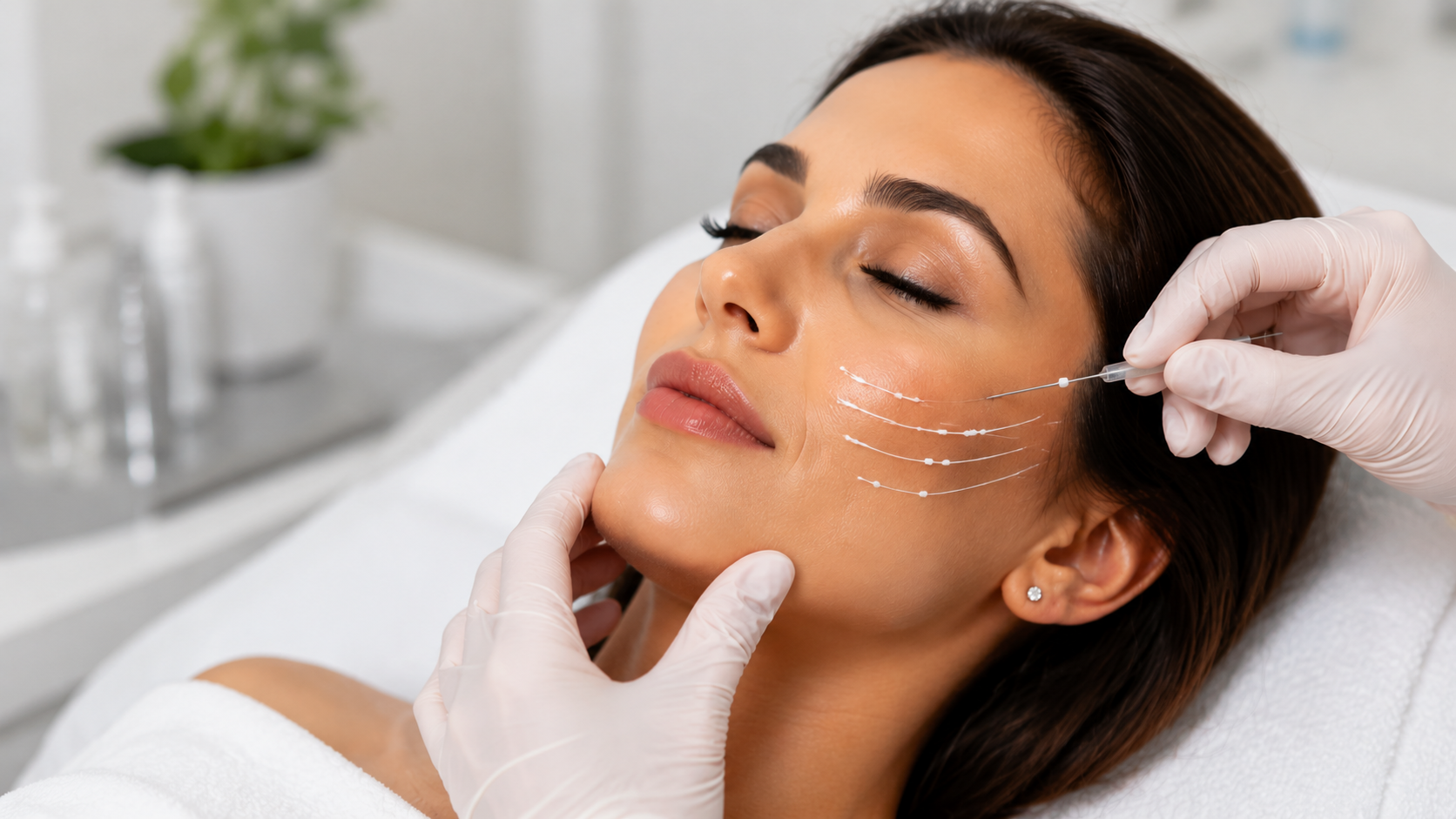
A less defined jawline, for example, can have several causes. Adding volume, repositioning tissue, and treating skin laxity are different approaches, even when the goal is a similar-looking improvement.
This guide explains how each treatment works, where it may fit, and what to discuss during a consultation.
What Is a PDO Thread Lift?
PDO stands for polydioxanone, an absorbable material used in certain medical sutures. A PDO thread lift involves placing specialized threads beneath the skin to create a modest lifting effect in selected areas.
- Lifting threads typically have small barbs that engage tissue. Their placement allows a provider to reposition tissue along a planned direction. The body gradually absorbs the threads, so the treatment does not provide permanent support.
- Thread placement also triggers a tissue response associated with collagen production. However, this should not be interpreted as a guarantee of substantial or lasting tightening.
- Results depend on the thread type, placement, anatomy, and individual response.
A thread lift offers less change than a surgical facelift. Understanding that distinction helps set realistic expectations.
How Does a PDO Thread Lift Work?
Treatment begins with assessing your facial structure and identifying where a small amount of repositioning could help. Your provider should evaluate skin thickness, tissue weight, asymmetry, and the degree of laxity.
- After preparing and numbing the area, the provider places the threads beneath the skin using a needle or cannula. Lifting threads engage the tissue, which is then adjusted into the intended position.
- The number and placement of threads depend on the treatment plan. More threads do not automatically mean a better result.
Some changes may be visible early, but swelling and bruising can affect the initial appearance. The American Society of Plastic Surgeons notes that results should be assessed as healing progresses over the following weeks.
Are Smooth PDO Threads the Same as Lifting Threads?
The term “PDO threads” can describe different thread designs and treatment goals.
- Barbed lifting threads are designed to engage tissue and provide mechanical support. Smooth threads lack the same anchoring structure and shouldn’t be described as producing an equivalent lift.
- This distinction matters when comparing treatment plans. A procedure aimed at stimulating a tissue response is different from one intended to reposition sagging tissue.
Ask which threads your provider recommends, what they are intended to accomplish, and how the expected outcome relates to your concern. Knowing the material alone does not tell you how the treatment will work.
How Are Dermal Fillers Different From PDO Threads?
Dermal fillers are injectable products used to add volume or improve contour in specific areas. Depending on the product and its approved use, they may address concerns such as cheek volume loss, lip fullness, or certain facial folds.
- Threads primarily aim to reposition selected tissue. Fillers primarily add material to an area.
- For someone with facial hollowing, restoring volume may be more relevant than lifting tissue. For someone with adequate volume but mild tissue descent, adding filler may not address the underlying concern.
Fillers also differ by material. Hyaluronic acid fillers and other filler types have different properties, indications, and removal considerations.
How Is Morpheus8 Different From Threads and Fillers?
Morpheus8 combines microneedling with radiofrequency energy. Small needles deliver controlled heat at selected depths, creating a tissue response that can support remodeling.
- It may be considered for selected concerns involving texture, acne scars, wrinkles, or skin laxity. Unlike fillers, it does not inject a volume-replacement material. Unlike lifting threads, it does not use barbed sutures to reposition tissue.
- This makes the treatment goal important. Uneven skin texture is a different concern from hollow cheeks or descended tissue. A consultation should explain whether radiofrequency microneedling fits the specific change you want to make.
Morpheus8 should not be presented as producing the same lifting effect as threads or surgery.
How Do the Three Treatments Compare?
| Feature | PDO Thread Lift | Dermal Fillers | Morpheus8 |
|---|---|---|---|
| Main approach | Uses absorbable lifting threads to support and reposition selected tissue | Adds injectable material for volume or contour | Delivers radiofrequency energy through microneedles |
| Typical discussion | Mild tissue descent | Volume loss or specific contour concerns | Texture, scars, wrinkles, or selected laxity concerns |
| Adds filler material | No | Yes | No |
| Uses lifting sutures | Yes, when lifting threads are selected | No | No |
| Result assessment | After swelling settles and healing progresses | Depends on the product and healing | Over time as the treatment response develops |
These differences help frame a consultation. They do not establish which treatment is best for an individual.
Which Treatment Might Fit Your Concern?
Start by describing the change you notice rather than choosing a procedure name.
- If your cheeks look hollow, the discussion may focus on volume loss. If tissue has descended and created mild jowling, a provider may evaluate whether threads could offer a worthwhile improvement.
- If acne scars or uneven texture are your priority, skin-directed treatment may be more relevant.
- Several concerns can occur together. A provider should explain which issue each recommendation addresses and what it will leave unresolved.
Significant loose skin may require a surgical assessment. Selecting a minimally invasive procedure should not mean accepting promises beyond what it can reasonably achieve.
What Should You Know About Recovery and Risks?
All three treatments require recovery planning and informed consent.
- Thread lifts can cause swelling, bruising, discomfort, dimpling, visible or palpable threads, infection, or thread extrusion. Some complications may require additional treatment. Ask how follow-up and corrective care would be handled.
- Fillers can cause swelling, bruising, lumps, and infection. Accidental injection into a blood vessel can cause tissue damage, vision problems including blindness, or stroke.
- An experienced provider should explain these risks and their emergency response arrangements.
Can These Treatments Be Combined?
A provider may discuss more than one treatment when your concerns involve different aspects of facial aging. However, combination treatment should have a clear purpose.
- Ask what each procedure contributes, whether treatments should be separated, and how previous threads or fillers affect the plan.
- Do not assume that combining procedures always improves results.
- Reviewing your response before adding another treatment can help keep decisions focused on your original goals.
What Should You Ask During a Consultation Near Plano?
Bring your medical history, medication list, and details of previous cosmetic procedures. Useful questions include:
- What is causing the change I want to improve?
- Why does this treatment fit my anatomy?
- What improvement is realistic?
- What are the alternatives and risks?
- How will recovery and follow-up be managed?
AVIA Medical Spa offers PDO thread consultations at its Carrollton location near Plano. An individual assessment can help clarify whether threads, fillers, Morpheus8, or another approach best addresses your concern.